Your LinkedIn Strategy Is Dead. Here's the 2026 Playbook.
Likes are vanity. Saves are sanity. Here's the exact playbook to dominate LinkedIn's new AI-driven ranking system — and what to do before you lose more visibility.
Table of Contents
- 1. The Algorithm Is Now AI-Driven (Not Keyword-Driven)
- What this means for you
- The fix
- 2. Your Profile Is a Landing Page (Not a Resume)
- Optimize for your Ideal Customer Profile (ICP)
- 3. Carousels Are Still the Reach King (But Quality Matters)
- The problem
- The fix
- 4. Win the First 45 Minutes (Reposts & Early Engagement)
- 5. Stop Sharing Personal Stories. Start Teaching Frameworks.
- The new standard
- 6. Pre-Validate Your Ideas (Don't Guess)
- The Outlier Method
- 7. Deplatform Your Audience (Before It's Too Late)
- The funnel
- The goal
- The Bottom Line
Grow your LinkedIn/X
audience now
AI-powered content creation and scheduling for LinkedIn & X.
Try Propelr for Free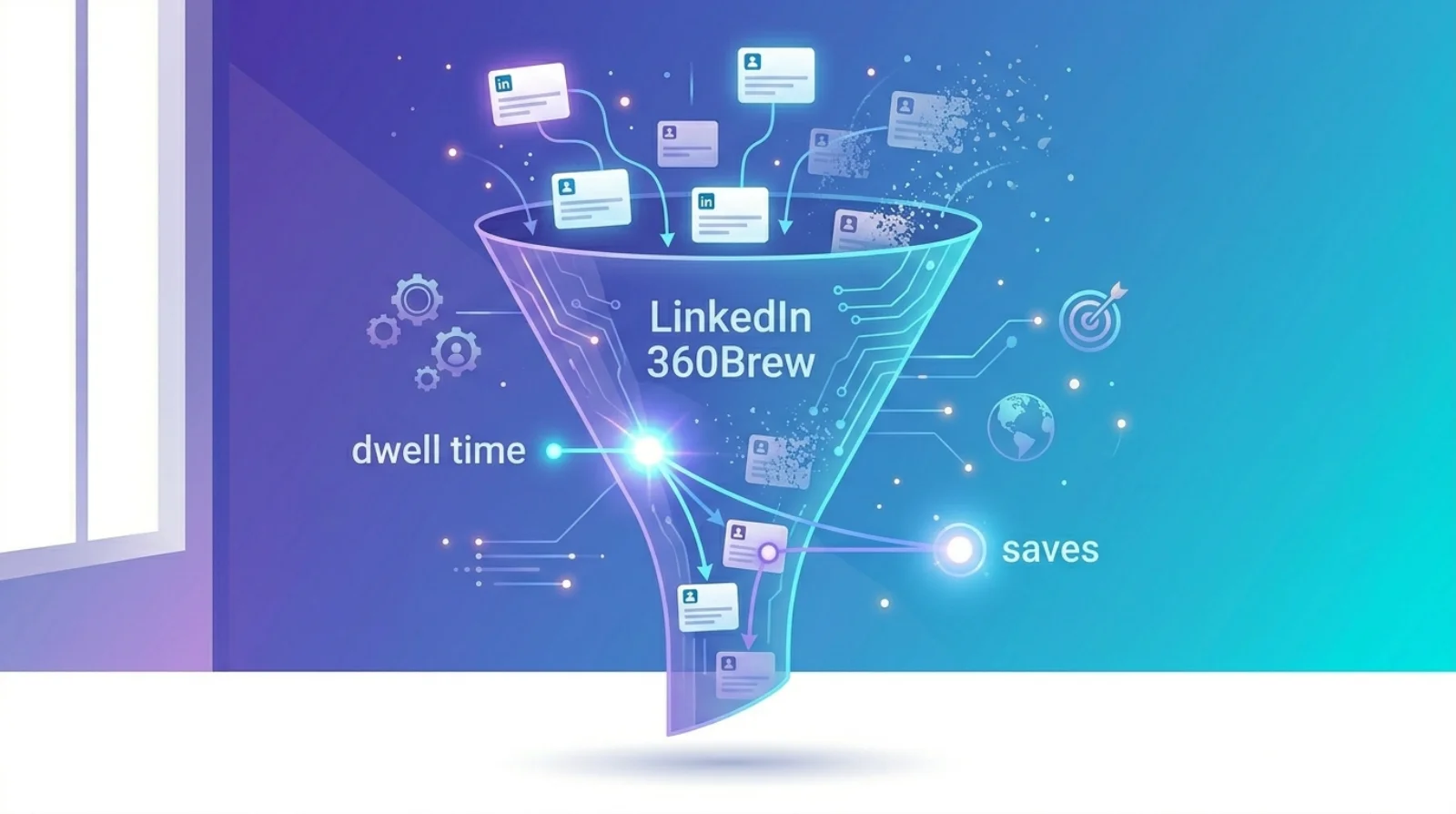
If you're still posting daily personal stories and hoping for viral luck, stop.
The LinkedIn algorithm you learned in 2024? It's obsolete.
In 2026, LinkedIn overhauled its entire ranking system. The old metrics (likes, comments) are taking a backseat to semantic relevance and deep engagement (saves, dwell time).
I've spent the last year analyzing over 10,000 posts inside Propelr. The data is clear: what worked 12 months ago is now killing your reach.
Here's the breakdown of the new system — and exactly how to adjust your strategy before you lose more visibility.
1. The Algorithm Is Now AI-Driven (Not Keyword-Driven)
LinkedIn isn't just matching keywords anymore. It's using a large language model to understand the meaning of your content and match it to user intent.
What this means for you
- Hooks are critical. The AI spends 3–5x more processing power on your first two lines. If the hook doesn't signal relevance immediately, the rest of the post doesn't matter.
- Semantic consistency matters. Your content must align with your profile's stated expertise. If your headline says "SaaS Founder" but you post about "Daily Meditation," the AI gets confused and throttles your reach.
The fix
Spend 50% of your writing time on the hook. Test contrarian takes, specific numbers, or clear promises.
- Weak: "Here are some thoughts on leadership."
- Strong: "I fired my top performer last week. Here's why it was the best decision I made."
2. Your Profile Is a Landing Page (Not a Resume)
Stop treating your profile like a CV. In 2026, it's a conversion funnel.
When the AI ranks your content, it also scans your profile to determine authority. If a user clicks your name after reading a post, what do they see?
Optimize for your Ideal Customer Profile (ICP)
- Banner: Use a clear call-to-action or value proposition (e.g. "Book a call," "Download my lead magnet," or your main offer). It's prime real estate — don't leave it generic.
- Headline: Clearly state who you serve and the pain point you solve.
- Featured Section: Highlight your best work, case studies, or lead magnets.
- About: Write for your buyer, not for recruiters.
If your profile doesn't scream "I solve X problem for Y person," the algorithm won't know who to show your content to.
3. Carousels Are Still the Reach King (But Quality Matters)
The data hasn't changed: Carousels drive the highest rate of new followers.
Why? Dwell time.
When someone swipes through a 7-slide document, they spend 30–60 seconds on your post. That signals to the AI that your content is valuable. Text posts? They're scanned in 3 seconds.
The problem
Most carousels are ugly, text-heavy, or take hours to design in Canva.
The fix
- Keep it visual. Less text, more white space.
- Focus on educational frameworks (see point #4).
- Export as PDF (not images) for the native document format.
This is exactly why we built the Propelr carousel builder. It generates 7–10 slide PDFs in 60 seconds so you don't lose hours in design tools. Consistency beats perfection.
4. Win the First 45 Minutes (Reposts & Early Engagement)
Saves and dwell time matter — but reposts are one of the strongest signals to the algorithm. When someone reposts your content, LinkedIn treats it as a high-intent vote and pushes your post to their network.
The catch: the algorithm decides early whether to give your post a second push. Engagement in the first 45 minutes often determines that. So:
- Build a small engagement network. DM 5–10 engaged connections when you publish, or share in a Slack/community: "Just dropped a post on X — would love your take." Don't ask for empty "great post" comments; ask for genuine reactions so the thread stays valuable.
- Build off-platform relationships. The people who show up in your first hour are often the same ones you've already connected with via email, DMs, or other channels. Nurture those relationships so they're there when you post.
- Reply to every comment in the first hour. It doubles the chance your post gets extended reach.
5. Stop Sharing Personal Stories. Start Teaching Frameworks.
This is the biggest shift.
In 2024, "here's what happened to me today" posts went viral. In 2026, users are fatigued by unsubstantiated stories. They want systems.
The new standard
- Brand your frameworks. Give your process a name (e.g., "The 3-Step Outreach Method").
- Focus on education. Teach them how to do something, not just what you did.
- Save-worthy content. Ask yourself: "Would someone save this to reference later?" If not, rewrite it.
Saves are the new likes. They signal long-term value to the algorithm.
6. Pre-Validate Your Ideas (Don't Guess)
Stop posting into the void hoping something sticks.
The Outlier Method
- Find 5–10 creators in your niche with similar audiences.
- Look for posts that performed 5–10x better than their average.
- Analyze the topic, format, and hook.
- Adapt that proven concept to your voice.
You're not copying. You're validating demand before you build.
Propelr's Trending Topics feed helps with this — it surfaces industry trends so you're not guessing what matters this week.
7. Deplatform Your Audience (Before It's Too Late)
LinkedIn can change the algorithm again tomorrow. You don't own your audience.
The funnel
- Awareness (Top): Broad educational content (carousels, viral hooks).
- Education (Middle): Deep dives, newsletters, case studies.
- Conversion (Bottom): Testimonials, direct offers, calls.
The goal
Move them off LinkedIn as soon as possible. Start an email newsletter. Capture leads. Build an asset you own.
The Bottom Line
The 2026 LinkedIn algorithm rewards clarity, consistency, and value.
- Optimize your profile for your ICP (including banner and headline with a clear CTA).
- Post carousels that teach frameworks.
- Write hooks that signal semantic relevance.
- Win the first 45 minutes with early engagement and reposts.
- Move engaged users to your email list.
- Review your analytics monthly — double down on formats and topics that get the most saves, reposts, and comments.
It's not about posting more. It's about posting smarter.
If you want to test the new carousel workflow (PDF export, AI-generated slides, scheduled publishing), we're offering 5 free credits on signup. No card required.
Stop chasing likes. Start building authority.
Frequently asked questions
Is LinkedIn still worth posting on in 2026?
What are the most important ranking signals in the 2026 LinkedIn algorithm?
How often should I post on LinkedIn in 2026?
Are carousels still the best format for LinkedIn reach?
Do hashtags still matter on LinkedIn?
Content and growth research team at Propelr
The Propelr team publishes playbooks from inside a content platform used to create, schedule, and analyze thousands of LinkedIn and X posts. Articles are grounded in real usage data and current platform behavior, not recycled advice.
Keep reading
All posts
How to Get Your LinkedIn Posts Cited by ChatGPT (2026)
LinkedIn is the #1 cited domain for professional queries in AI search. What three studies of 2.7M+ citations reveal about getting your posts quoted.
How Often to Post on LinkedIn in 2026 (Real Data)
Buffer's 2M-post study says post more. Everyone else says 2-5x a week. Here's why both are right, and how to find your own ceiling.
Best Time to Post on LinkedIn in 2026 (Data-Backed)
The best time to post on LinkedIn in 2026, backed by data from millions of posts. Day-by-day windows and how to find your own peak hours.